
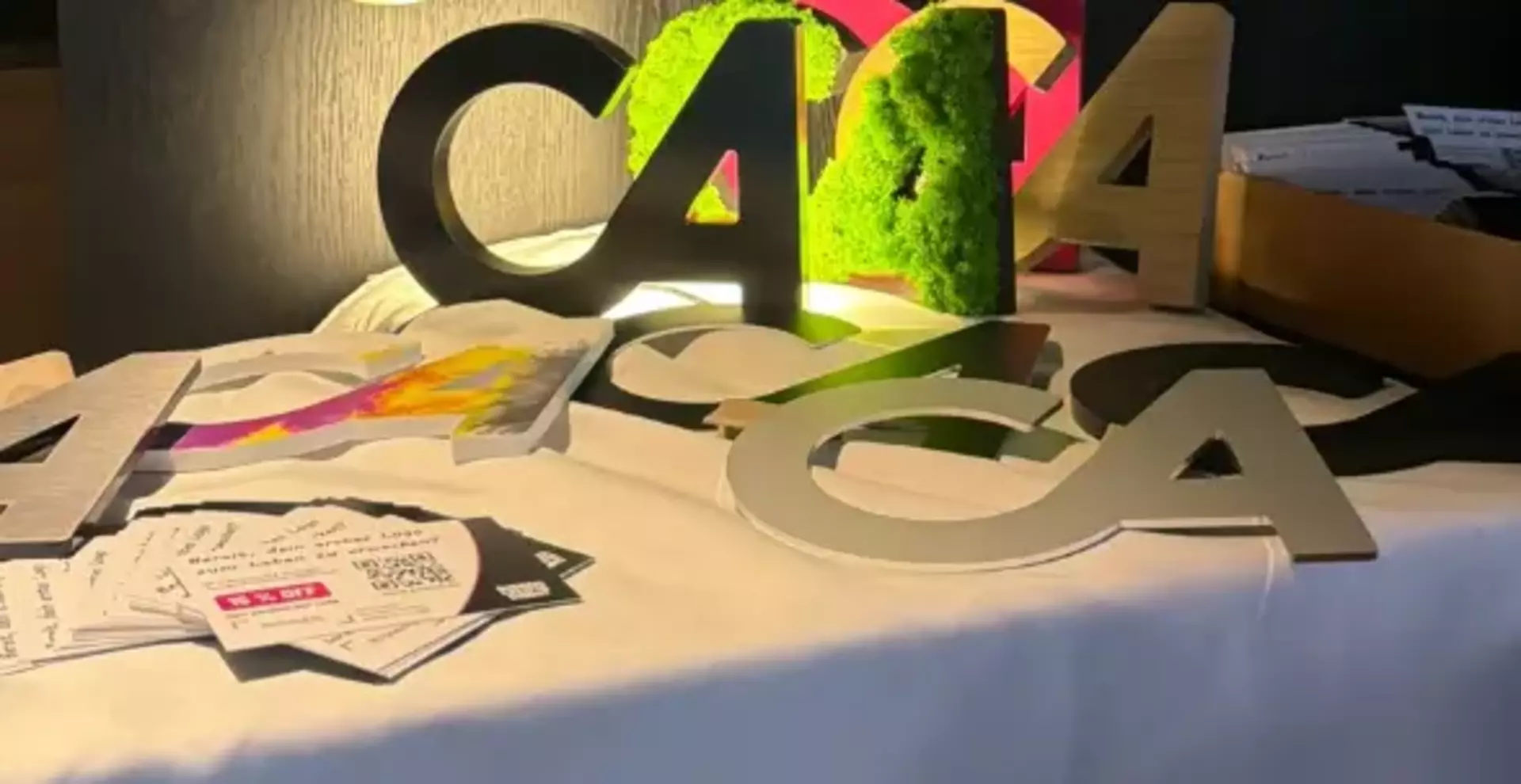
We spent a full day exhibiting our 3D cutout range at the Business Creator Summit in Berlin recently. Between conversations at the stand, we caught some genuinely good talks on personal branding: three stages, over 50 speakers, each an expert in their field. AI, positioning, content strategy, LinkedIn — barely a stone left unturned. By noon, it hit me which stone nobody was going to touch: the physical spaces where all these personal brands actually get experienced. The podcast backgrounds. The offices. The studios where webinar content gets made.
Physical branding happens to be our entire job. Getting logos off screens and into rooms is what we do every day: as 3D cutouts in acrylic, steel, wood, even moss, and illuminated letters ending up on studio walls, behind reception desks, in video frames. So when visitors at our stand seemed genuinely surprised that a 3D logo works as a podcast background, that told us something. For an audience that thinks about branding professionally, the physical layer of a personal brand is an afterthought — when it's considered at all.
This article starts where the typical 7-step guide never arrives: physical branding in the context of building a personal brand.
What is personal branding? The short version
Personal branding means treating yourself like a brand. Not your product, not your company. You. The term goes back to Tom Peters, who published "The Brand Called You" in Fast Company in 1997 and argued that everyone is CEO of their own brand. Corporate branding puts a company at the center of that work; personal branding puts a person there.
You already have a personal brand. Everyone who has met you, watched you, or worked with you carries a version of you in their head. The only question is whether you steer this image or not through the mere-exposure effect: we rate things more positively the more often we encounter them. Familiarity is most of what we casually call trust. Which means your brand is built at your touchpoints, all of them, weighted by how often people see them.
So. Which of your touchpoints gets seen the most?
The wall behind you
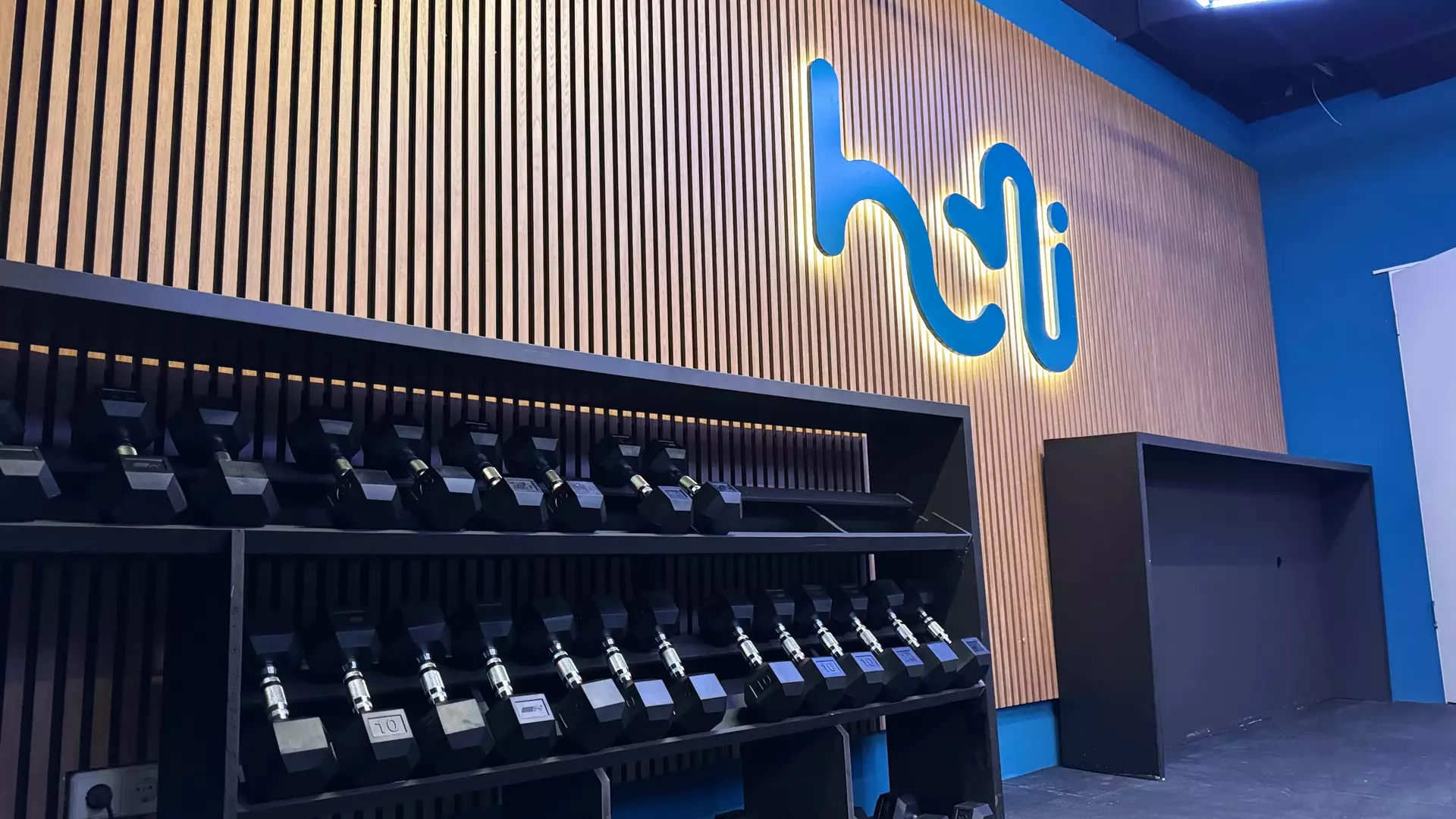
Do the math on your own content. Your logo in a profile picture is a few pixels wide. The wall behind you fills most of the frame in every video, every Reel, every clip, in everything you publish, for years. Nothing else in your brand collects that many impressions. And for most creators, that surface is a bookshelf, a white wall, or a houseplant that wandered into the shot.
The professionals figured this out long ago. Britain's most-streamed podcast on Spotify pays people to spend weeks building physical objects, because physical form carries what a screen graphic can't: the team behind "The Diary of a CEO" says openly that it obsesses over physical props. And flip through the thumbnails of the big video podcasts yourself. The sets are designed, the show's identity sits in the frame, and you often recognize the show before you recognize the guest. That's the mere-exposure effect, working in the background of every clip.
The wall behind your desk appears in every interview or client conversation, and it answers a question nobody asks out loud: does this person take their own work seriously?
cadout tip: On camera, the difference between "records in the spare room" and "has a studio" comes down to depth and deliberate light. Here are some details to make your recordings look professional:
- Matte beats gloss on camera. Glossy surfaces bounce your video lights back into the lens as hotspots. A satin or matte finish keeps the shape calm.
- If the logo is lit, light it backwards. A back-lit piece throws its glow onto the wall while the front stays dark and crisp: a soft halo, no glare. Dark walls make the effect strongest, which is why professional video podcast sets are so often dark.
- Same light temperature, everywhere. Warm (2,700–4,000 K) for intimate formats, neutral white around 5,000 K for a clean, precise look — and matched to the rest of your lighting. Mixed temperatures are what make a shot feel vaguely off without the viewer knowing why.
The material is part of the message
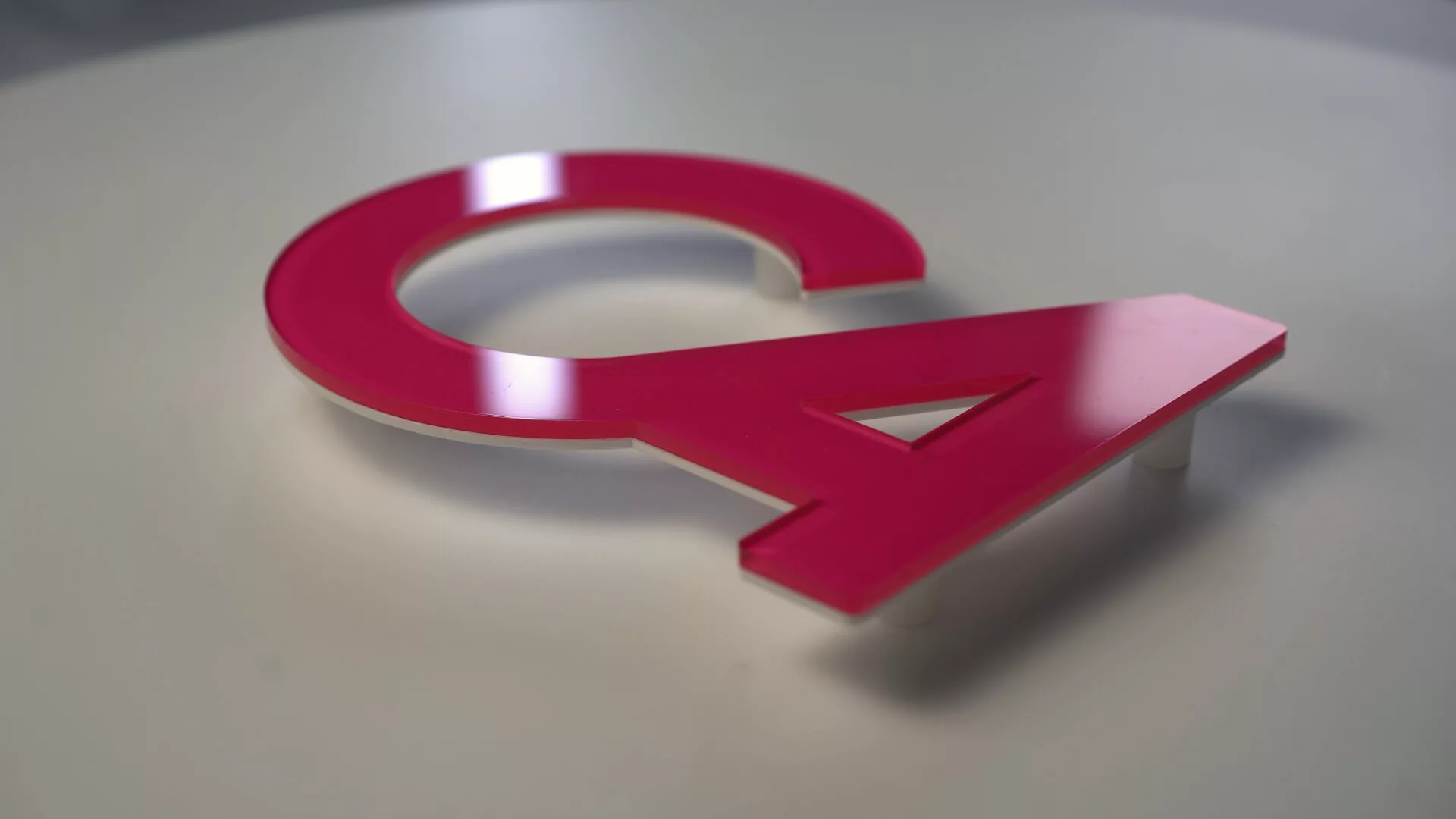
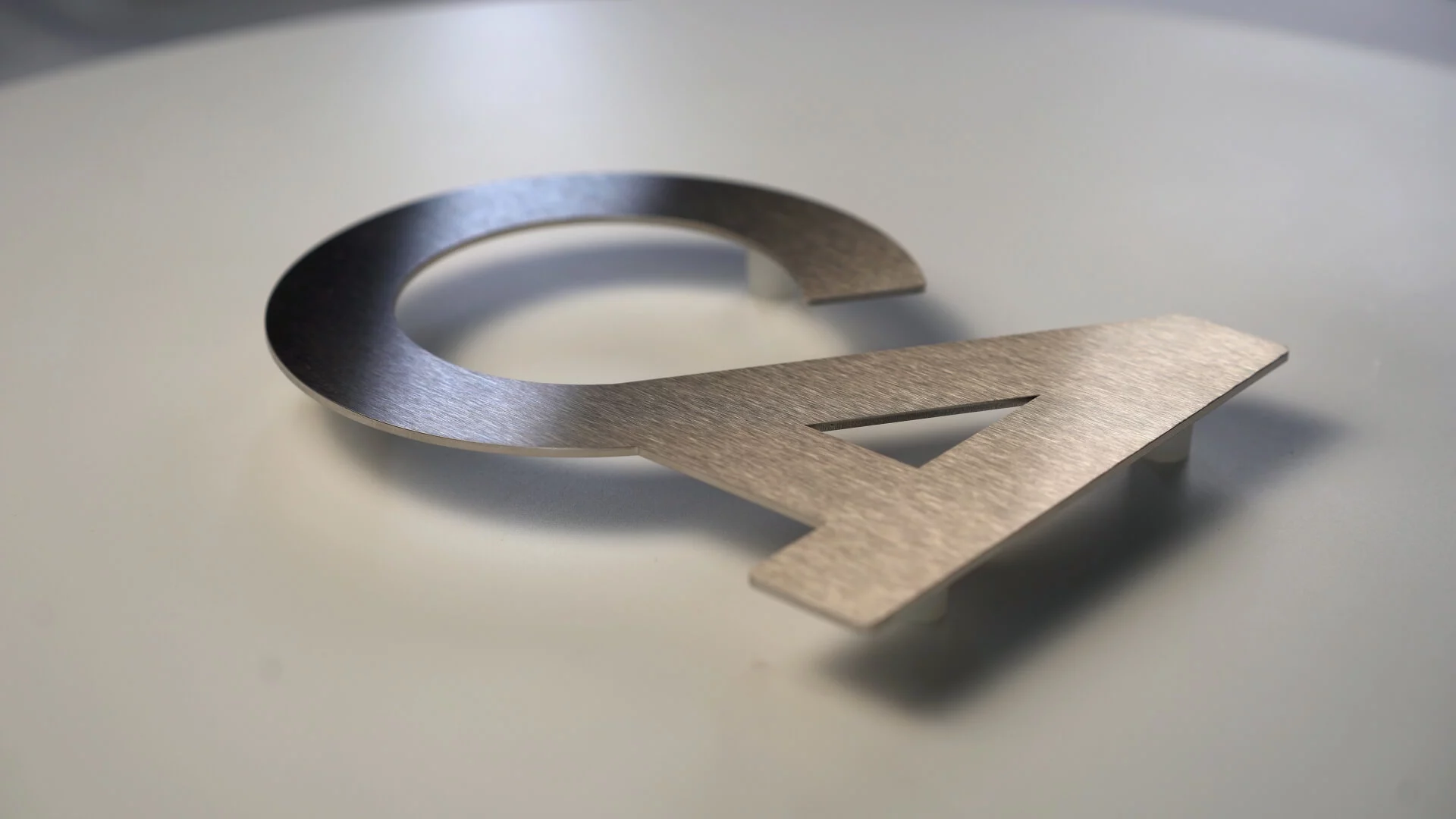
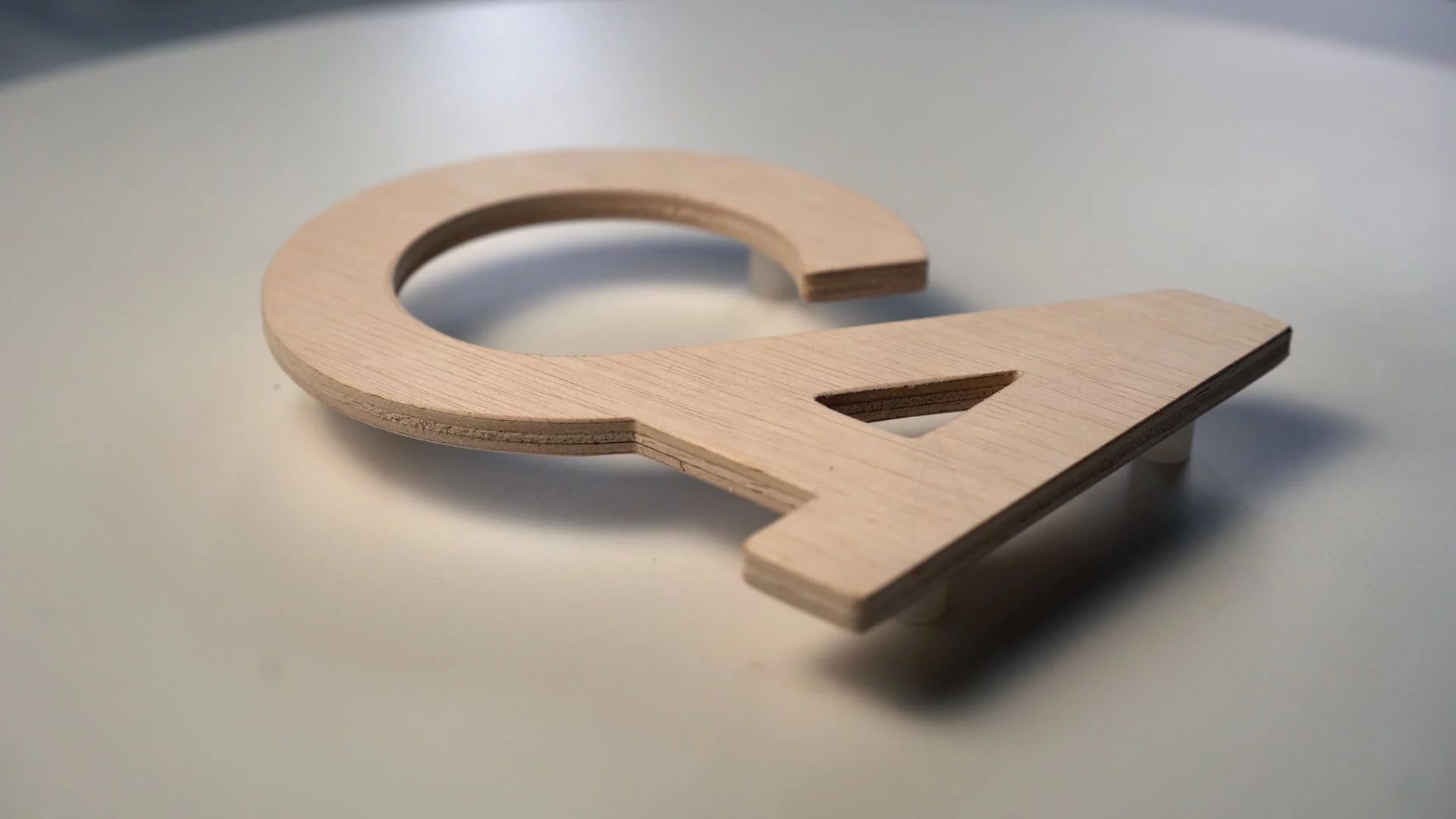
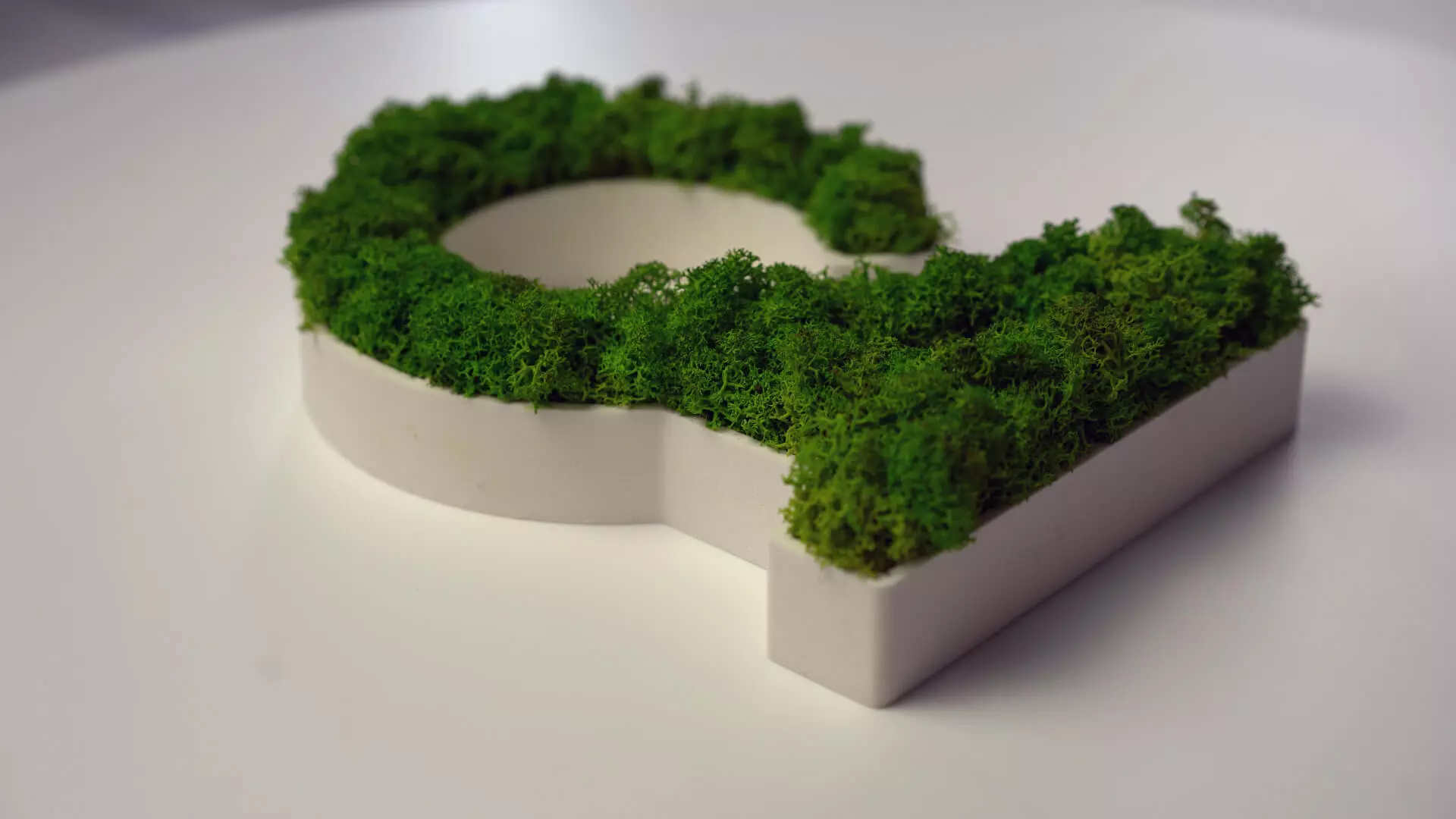
In physical space, your brand speaks through material before anyone reads the logo. Glossy acrylic in an exact brand color says precision. Brushed stainless steel says permanence; it has weight, sound, resistance. Wood warms a room and a video frame. Preserved moss makes a statement about what you value without a single word. The same wordmark, cut from these four materials, builds four different brands.
Remember to pick the material the way you pick a typeface: as compression of what you stand for.
Personal branding strategy: the other six steps
Now that we've covered the layer we think is missing, here are the steps we consider non-negotiable for an effective personal branding strategy.
1. Positioning: what do you stand for, and what do you refuse to cover?
Start with an honest inventory. What can you do better than most people you know? Which topics could you still talk about in five years without running dry? Then the harder half: what do you deliberately leave out? Positioning is mostly subtraction. Write down three topics that are yours. Everything else is somebody else's brand.
2. Values and attitude: the part nobody can copy
Expertise can be googled. Your attitude can't. Whether you're blunt or diplomatic, playful or dry, that's what decides who feels connected to you and who scrolls past. Don't perform a personality you don't have. A fake one won't survive a hundred videos, and your audience will notice the cracks before you do.
You already saw the physical version of this one: material is attitude, made permanent. Steel and moss are not interchangeable.
3. Audience: who exactly, and what do they get?
"All founders" is not an audience. "First-time e-commerce founders hiring their first employees" is. The sharper the picture, the easier every decision downstream — topics, tone, even which jokes land. It shapes your rooms too: a corporate boardroom set and a neon-lit creator studio attract different people on purpose.
4. Visual identity: a mark that works without your face
Your face is the core of a personal brand, but it doesn't scale. It can't be a favicon (unless you are Joe Rogan), it can't sit on a podcast cover at thumbnail size, and it can't be cut out of acrylic and mounted on a wall. So you need a second layer: a mark or wordmark, a color world, one or two typefaces. Do you need it on day one? No. But as soon as your brand lives on more surfaces than your profile picture, you need a mark that works without your face.
A good example is Michael Jordan. Nike compressed an entire personal brand into one silhouette, and the Jumpman has now spent almost four decades stitched onto shoes, tags, and jerseys. Karl Lagerfeld pushed the idea further: ponytail, high collar, dark glasses. His profile became the literal logo of his label, and it's still selling bags years after his death.
5. Platform choice: build a home base, then multiply
Two questions decide where you start: where does your audience already spend time, and which format suits you? If you like writing, that's LinkedIn or a newsletter. If you think out loud well, a podcast or YouTube. That's your home base, the place where you produce rather than just post.
But a home base is often not enough. A personal brand that lives on one rented platform is one algorithm change away from silence, so the goal is presence on as many channels as you can genuinely sustain. That doesn't mean producing five times over. Strong creators make once and repurpose: a podcast episode becomes clips, quotes, a newsletter section, a carousel. Depth in one place, presence in many.
6. Content consistency: the long game
This is where most people quit. Personal branding is a mere-exposure game, and the effect comes from repetition over a long stretch, not from one viral hit. How long? Think in years, not weeks. This is why you have to plan for the version of you that's tired in November. One good post a week for two years beats daily posts for six weeks.
Where does your brand stop existing?
Walk through your touchpoints one by one: feed, website, newsletter. Then the video call, the studio, the stage. At which point does your brand turn into a white wall?
If the answer is "right behind me," this is the easy part to fix. Choose the material that suits your brand, upload your design to our Web2Cut configurator, set a size, and see your logo in a realistic 3D preview within minutes.