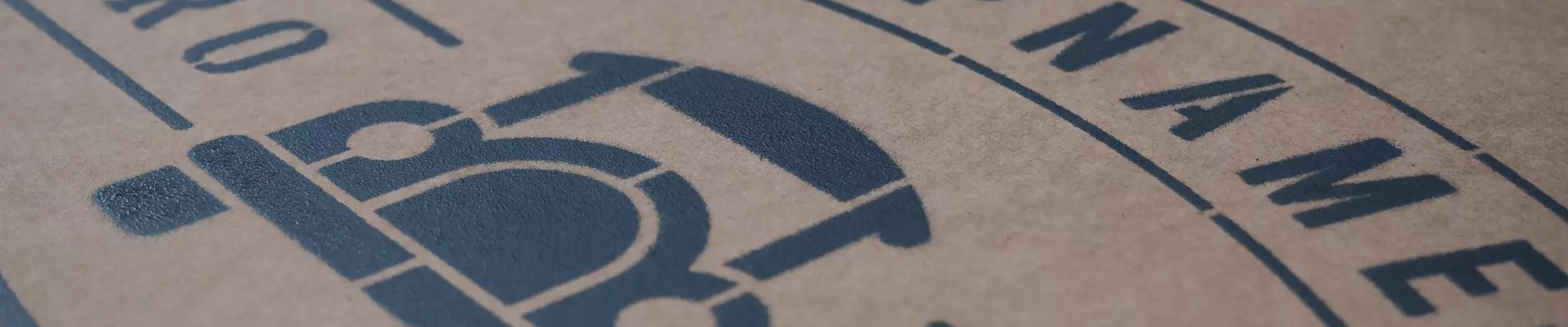
Macro shot of a sprayed design on a cardboard

Surfaces & Edge Sharpness

Stenciling is very easy. However, to ensure it works as well as possible and you achieve exactly the result you want, there are a few small things to keep in mind. Below, we have summarized some hints and tips for you.

Cool stencil look or
razor sharp—here's how!

How sharply and precisely you can apply your motif to the desired surface depends mainly on two factors: the thickness of the stencil material and how tightly it adheres to the surface when the paint is applied. By choosing the right stencil and paint application method, you can achieve the ideal result for your specific requirements. 

Material thickness

The thicker, the better, right? Au contraire, mon frère!
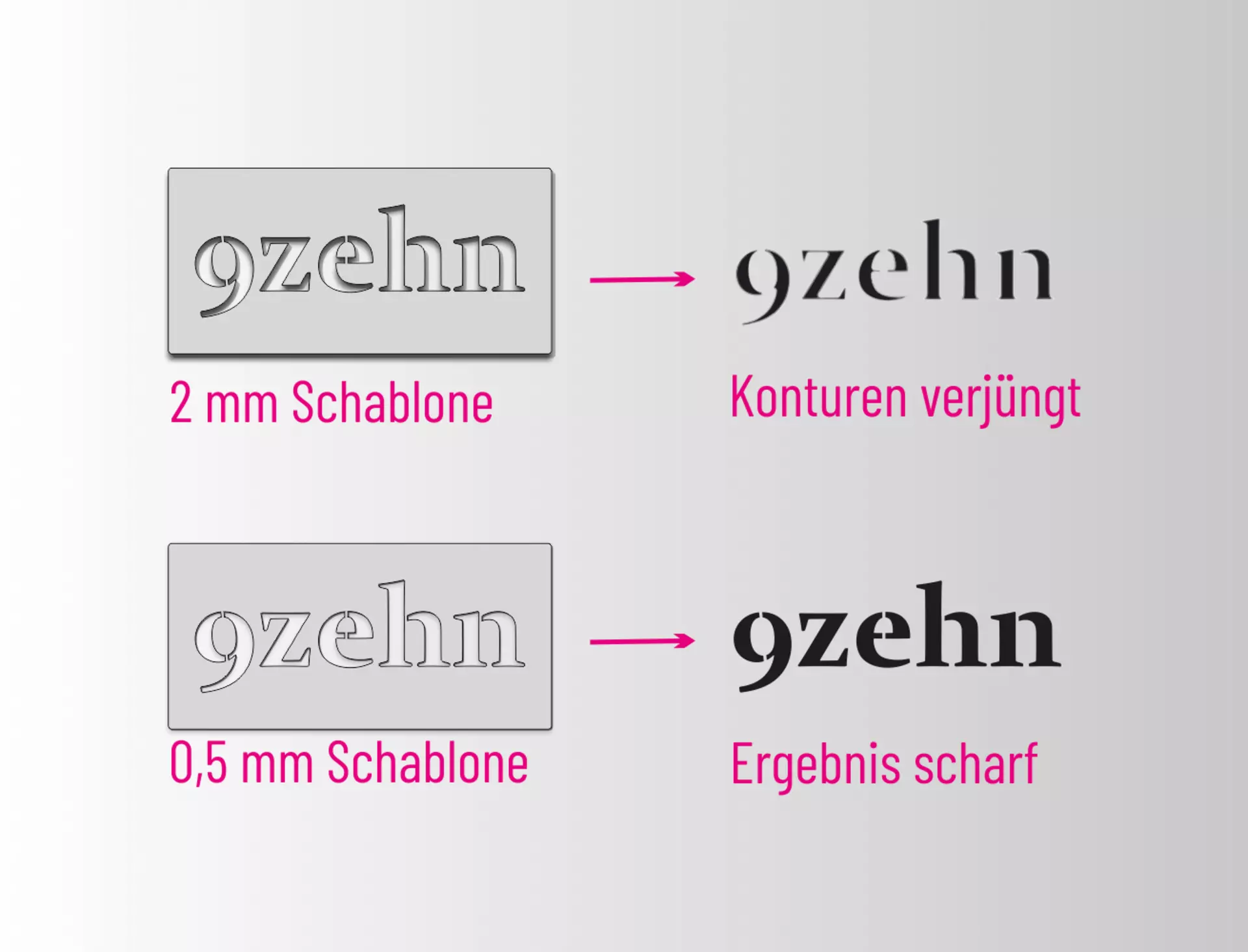
Thinner stencils produce sharper motif contours, as the paint cannot penetrate the corners as well with thicker material. So we don't want to cut corners, we want to achieve the best possible result. That's why we choose stainless steel sheet metal rather than aluminum for our metal stencils. This allows us to achieve the same weight and stability with approximately one-third of the material thickness. The only exception to this are the burning stencils. These need to be slightly thicker so that they do not deform under the intense heat.


Production advantage
Our thinner material thicknesses, whether plastic (0.35 mm) or metal (0.5-1 mm), enable a much higher resolution during laser cutting. This means we can cut much more intricate texts and motifs. Of course, the stencils are still stable.
§D-Zahl 2021 mit Schablonenstatistiken

Surfaces

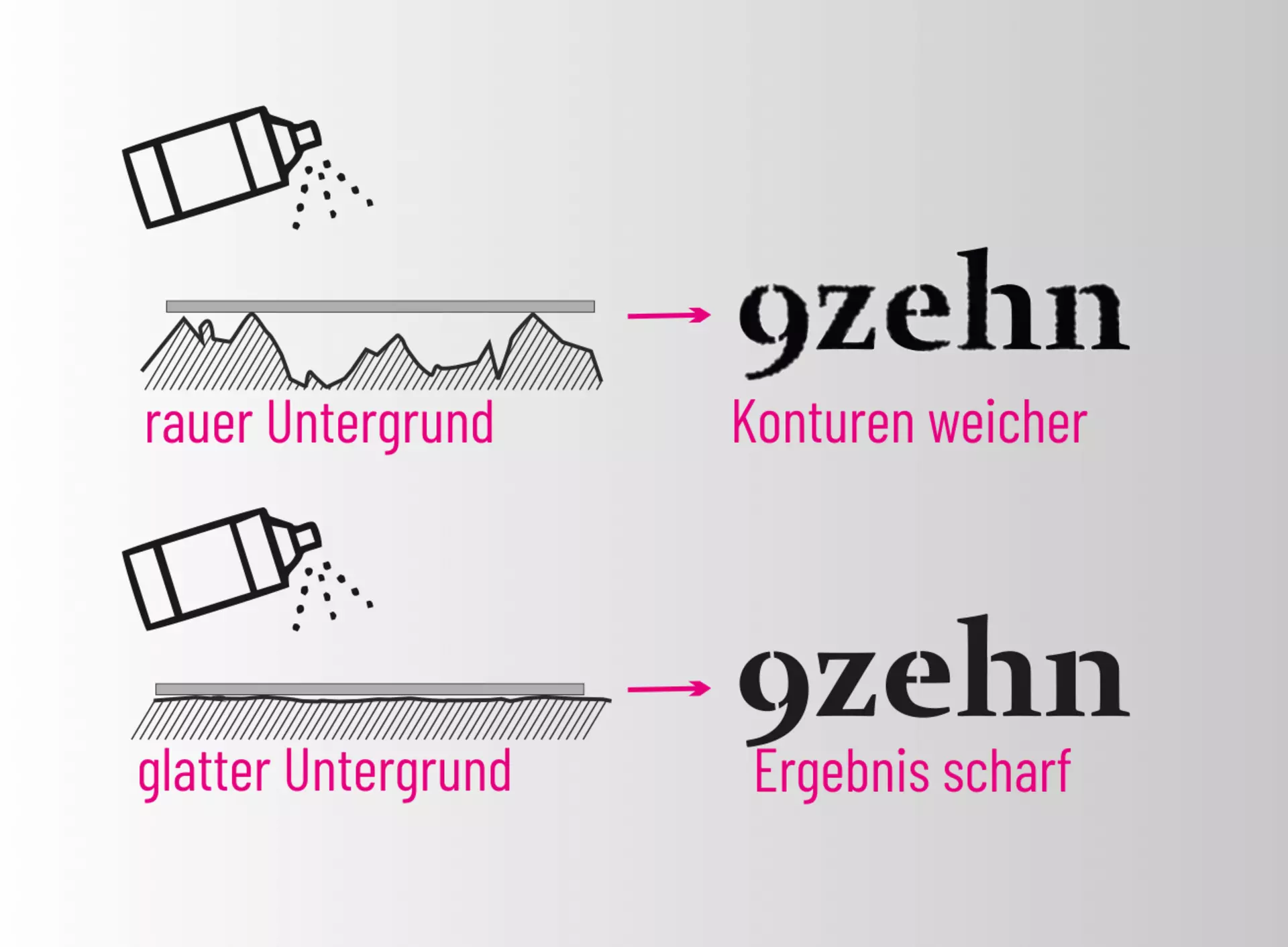
The smoother the surface, the sharper the result
The reusable metal and plastic stencils always lie on the highest points of the surface. The contours are sharp at these points. Where the stencil is slightly further away, the contours fade softly. This creates the typical “stencil look.”
The exception to this are self-adhesive painting stencils, which adhere closely to the structure even on rough plaster or woodchip wallpaper. When used properly, razor-sharp results are guaranteed.

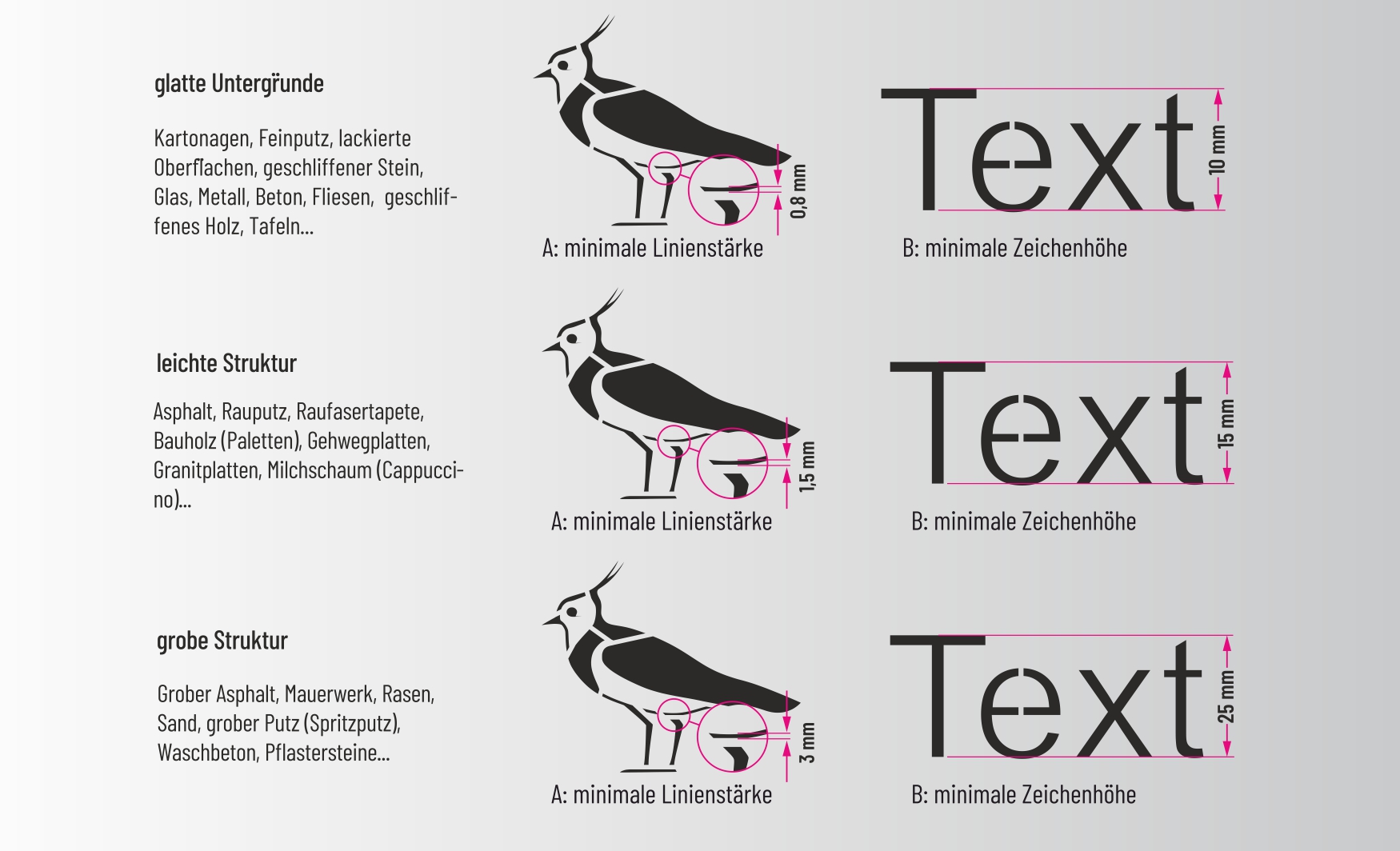
Depending on the application/surface and stencil, you need to consider how intricate your motif should be. If you want to sign a smooth piece of cardboard, you can reproduce very fine text and motifs, but if you are using chalk spray on rough asphalt, everything should be a little larger. Take a look at the PDF “data sheet” for the respective stencil.

Detail sizes & backgrounds

Minimum line thickness & character height. These measurements are not strict specifications, but only rough design guidelines or empirical values.
If you follow these guidelines, our experience shows that your motif or text should work well and be legible on the corresponding substrate. For text, the font is of course also relevant. Simple, plain fonts are more legible than handwriting or fonts with fine serifs.
 

CONFIGURE NOW ! with instant pricing CONFIGURE NOW ! with instant pricing